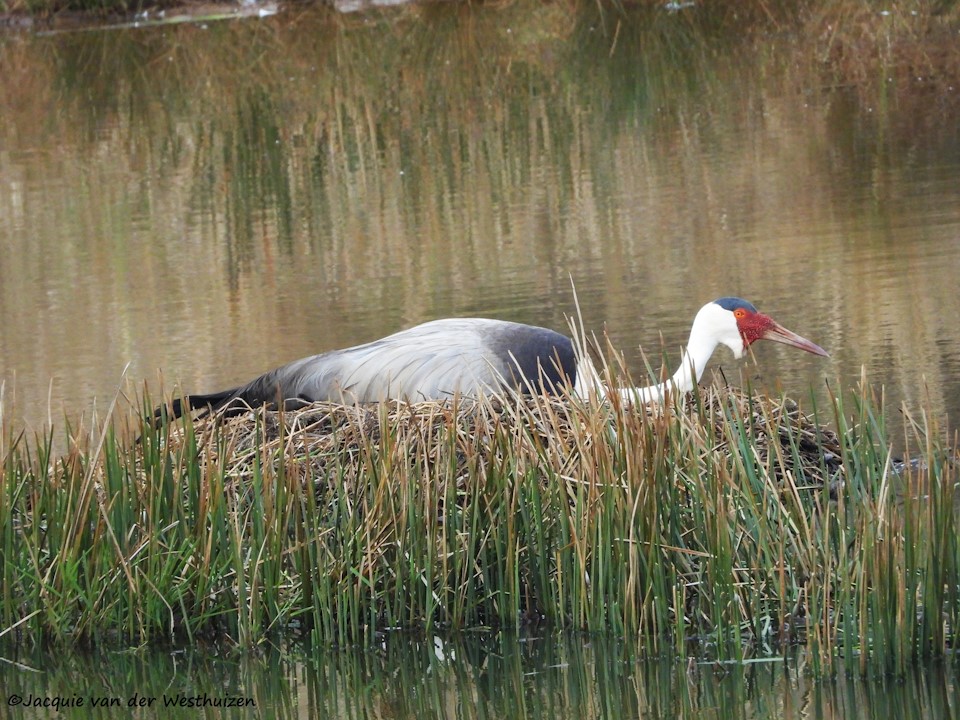
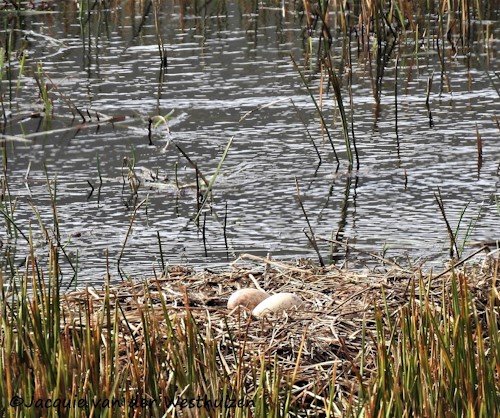
 It's Wattled Crane breeding season again!!
Karkloof is home to all three crane species and winter is breeding season for the Wattled Cranes.
Wattled cranes will lay 2 eggs, three days apart and incubate them for between 33 – 36 days. Their nests are mounds of reeds and mud and are found in dams. The nests are surrounded by water as this provides protection against predators that don’t like water like serval and jackal. Once the first egg has hatched, they will continue to incubate the second egg until they know that the first chick is healthy and will then abandon the second egg. When the chicks are born, they are fully developed and can walk and swim straight away. The parents are extremely protective, you will always find them together, one will always be alert and ‘standing watch’ while the other one will be attending to the chick. The chicks fledge at about 5 months but will stay with the parents for almost a year until the next breeding season, where the juvenile will join the floater flock. A floater flock are all the juvenile and adult birds that are too young to pair up and breed so they flock together during breeding season while the mature birds go off to breed. Cranes reach breeding age when they are between 3 - 6 years old, the are monogamous. Cranes are omnivores and eat mainly rhizomes and tubers of reeds and water lilies, but will also eat snails, amphibians, earthworms and snakes should the occasion arise. They are between 1.5 – 1.8 m tall, with a wingspan of between 2.3 – 2.6m and weigh between 6 – 9kg. Humans, jackal, serval, dogs and power lines are a few of the threats that contribute to the demise of these beautiful birds.
Come for a drive (or contact us) through the Karkloof and see all three crane species foraging in the pastures. Don’t miss out on this beautiful spectacle.
Photo credit: Jacquie van der Westhuizen